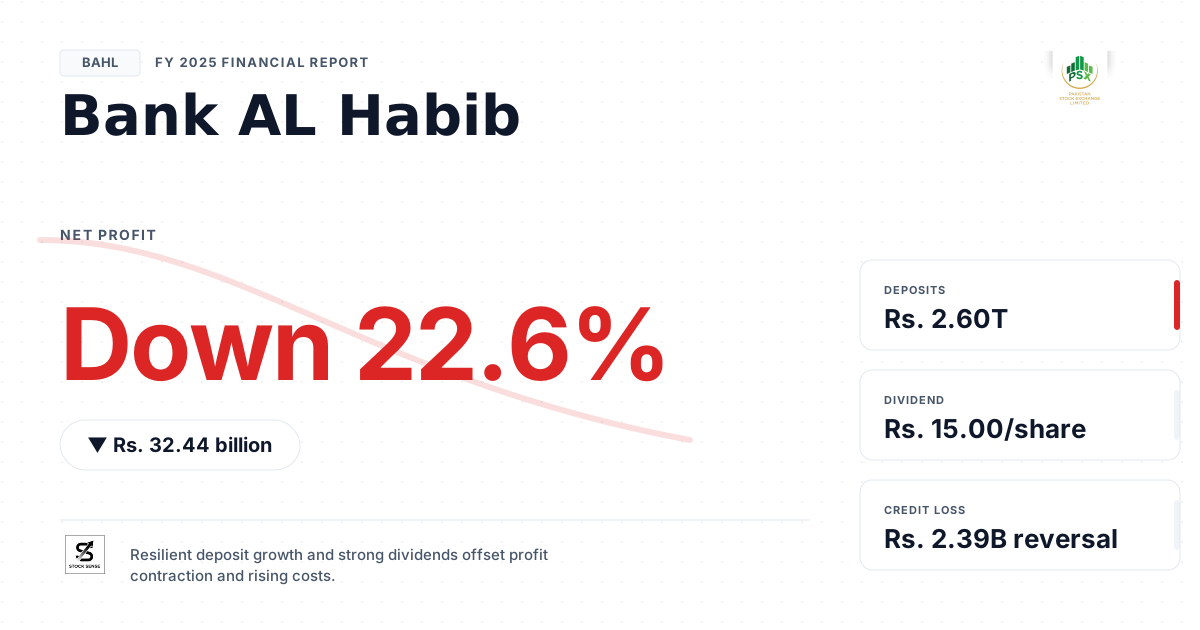
Bank AL Habib Limited (BAHL) has released its consolidated financial results for the year ended December 31, 2025, revealing a notable decline in profitability compared to the previous year. Despite this, the bank demonstrated a robust commitment to shareholders with a total cash dividend of Rs. 15.00 per share and achieved significant growth in its deposit base, signaling underlying strength in a challenging operating environment.
Financial Performance Overview
The bank's core net mark-up/interest income experienced a significant decrease of 16.3%, falling from Rs. 156.47 billion in 2024 to Rs. 130.97 billion in 2025. This contraction in core interest earnings was the primary factor impacting overall revenue. Consequently, total income for the year also declined by 12.1% to Rs. 162.93 billion.
In a positive development, non-mark-up/interest income showed remarkable resilience, growing by 10.7% to Rs. 31.96 billion. This growth was largely propelled by an impressive 90.3% surge in foreign exchange income, which reached Rs. 7.44 billion, complemented by a slight 0.5% increase in fee and commission income. However, operating expenses rose by 17.2% to Rs. 95.63 billion, further pressuring the bank's bottom line.
Profit before taxation decreased by 21.4% to Rs. 68.20 billion. A significant and positive factor was the reversal in credit loss allowance, which shifted from an expense of Rs. 14.89 billion in 2024 to an income/reversal of Rs. 2.39 billion in 2025. This substantial swing suggests improved asset quality or effective recoveries. Despite this positive impact, profit after taxation attributable to shareholders ultimately declined by 22.6% to Rs. 32.44 billion, resulting in Basic and Diluted Earnings Per Share (EPS) of Rs. 29.19, down from Rs. 37.70 in the prior year.
The balance sheet presents a mixed yet robust picture. Total assets remained relatively stable at Rs. 3.31 trillion (2024: Rs. 3.32 trillion). Crucially, customer deposits and other accounts grew strongly by 14.0% to Rs. 2.60 trillion, underscoring continued public trust and the bank's effective funding strategy. Concurrently, BAHL significantly reduced its borrowings by 56.4% to Rs. 290.30 billion, enhancing its financial leverage. Investments increased by 5.2% to Rs. 2.03 trillion, while advances decreased by 12.9% to Rs. 791.49 billion, indicating a strategic shift in asset allocation, possibly towards less risky avenues in a high-interest rate environment. Total equity attributable to shareholders also saw healthy growth of 13.6% to Rs. 176.16 billion, reinforcing the bank's capital strength.
Key Performance Drivers
- Exceptional Deposit Mobilization: The robust 14.0% growth in deposits highlights BAHL's strong franchise and deep customer confidence, providing a stable and cost-effective funding base.
- Diversified Non-Interest Income: A near doubling of foreign exchange income was a critical driver, effectively offsetting some of the pressure from lower net interest margins.
- Proactive Credit Risk Management: The significant reversal in credit loss allowance underscores effective risk management and potentially a healthier loan book, contributing positively to the profit before tax.
- Strategic Asset Allocation: A notable decrease in advances coupled with an increase in investments suggests a prudent strategic pivot, likely towards government securities or other less risky avenues amidst prevailing economic conditions.
Management's Strategic Signals and Shareholder Returns
Despite the annual profit contraction, BAHL's board recommended a final cash dividend of Rs. 4.50 per share (45%), bringing the total cash dividend for 2025 to an impressive Rs. 15.00 per share (150%), inclusive of interim dividends already paid. This consistent dividend payout, representing a strong 51.4% of the year's earnings, signals management's confidence and unwavering commitment to shareholder returns, even during a challenging year. The substantial reduction in borrowings further indicates a prudent and disciplined approach to liability management.
The Annual General Meeting is scheduled for March 30, 2026, in Multan, with the share transfer books to be closed from March 16 to March 30, 2026, for dividend entitlement.
Investor Takeaway: Resilience Amidst Headwinds
For investors, BAHL's latest results present a nuanced yet resilient picture. While the decline in net interest income and overall profitability is a key area of concern, the bank's exceptional ability to significantly grow its deposit base and effectively manage credit risk (evidenced by the allowance reversal) are powerful positives. The consistent and generous dividend payout remains a significant attraction for income-focused investors, reinforcing confidence in the bank's long-term value proposition.
Moving forward, investors should closely monitor the trajectory of net interest income, as a recovery in this core segment will be crucial for a rebound in profitability. The bank's continued success in diversifying non-interest income streams, particularly foreign exchange, and maintaining strong asset quality will also be vital indicators. BAHL's robust capital base and prudent liability management suggest it is well-positioned to navigate future market dynamics, but a sustained return to higher earnings growth will be the ultimate catalyst for enhanced shareholder value.