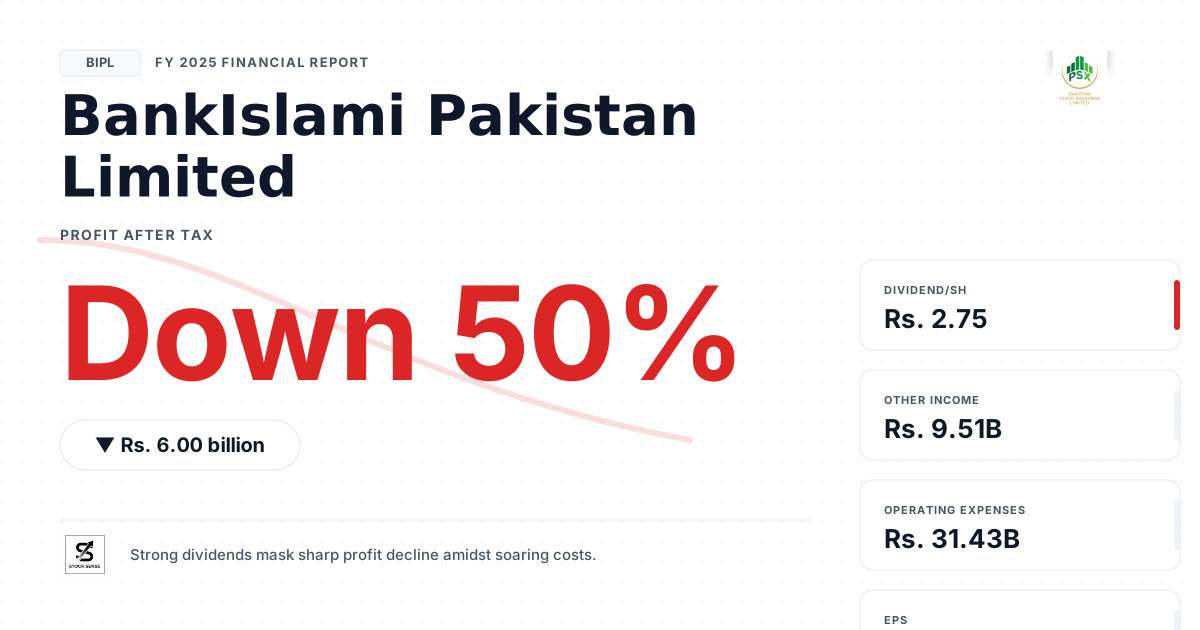
BankIslami Pakistan Limited (BIPL) has announced its financial results for the year ended December 31, 2025, revealing a mixed bag for investors. While the bank maintained a healthy total cash dividend of Rs. 2.75 per share, the headline profit after tax saw a substantial decline of nearly 50% year-on-year, falling from Rs. 11.83 billion in 2024 to Rs. 6.00 billion in 2025. This significant drop was primarily driven by a contraction in net profit/return and a surge in operating expenses.
Financial Performance Overview
BIPL's net profit/return, a crucial component of core earnings, decreased by approximately 23% from Rs. 46.39 billion in 2024 to Rs. 35.65 billion in 2025. This contraction significantly impacted overall profitability. Despite this, the bank demonstrated remarkable growth in "Other Income," which more than doubled from Rs. 4.59 billion to Rs. 9.51 billion. This surge was largely fueled by a nearly 495% increase in "Gain on securities - net," reaching Rs. 4.17 billion, and a 48% rise in fee and commission income.
However, operating expenses rose sharply by 42%, from Rs. 22.16 billion to Rs. 31.43 billion, putting significant pressure on the bottom line. Consequently, profit before taxation fell by about 45% to Rs. 13.96 billion, and profit after taxation nearly halved to Rs. 6.00 billion. This translated into a basic and diluted earnings per share (EPS) of Rs. 5.41 for 2025, down from Rs. 10.67 in 2024.
On the balance sheet, BIPL showed resilience in deposit mobilization, with "Deposits and other accounts" growing by a robust 17.9% to Rs. 660 billion. Total assets also expanded by 4.5% to Rs. 771 billion. Interestingly, Islamic financing, related assets and advances saw a slight decline of 1.5% to Rs. 291.8 billion, while investments decreased by 6.4% to Rs. 322.9 billion. The bank also reported a positive shift in its credit loss allowance, moving from an allowance of Rs. 2.73 billion in 2024 to a reversal of Rs. 632 million in 2025, which provided a partial offset to the declining core profitability. Cash and cash equivalents at year-end significantly increased by 73.2% to Rs. 72.89 billion from Rs. 42.08 billion.
Key Drivers & Strategic Insights
The primary drivers influencing the 2025 results were:
- Decline in Net Profit/Return: This core income stream faced significant headwinds, suggesting challenges in the bank's primary financing activities or changes in profit rates.
- Explosive Growth in Other Income: Specifically, the nearly five-fold increase in "Gain on securities - net" played a crucial role in mitigating the decline in net profit/return. This indicates successful treasury management or favorable market conditions for securities trading.
- Surging Operating Expenses: The substantial increase in operational costs is a major concern, potentially reflecting inflationary pressures, expansion costs, or higher administrative overheads.
- Credit Loss Allowance Reversal: This reversal provided a significant boost to pre-tax profit, suggesting an improvement in asset quality or a more optimistic outlook on loan recoveries compared to the previous year.
- Strong Deposit Growth: The healthy increase in deposits demonstrates continued customer trust and market penetration, providing a stable funding base for future growth.
Management Actions & Shareholder Returns
The Board's recommendation of a final cash dividend of Rs. 1.25 per share (12.5%), in addition to the Rs. 1.50 interim dividend (15%) already paid, signals management's commitment to shareholder returns despite the challenging profit environment. The total dividend of Rs. 2.75 per share (27.5%) is a positive sign for income-focused investors. The absence of bonus or right shares indicates a preference for cash distribution. The significant increase in cash and cash equivalents, coupled with a turnaround from cash used in investing activities (Rs. 32.24 billion used in 2024) to cash generated (Rs. 6.40 billion generated in 2025), suggests a more liquid position and potentially a more conservative investment strategy in the short term, or a shift in asset allocation.
Investor Takeaway
For investors, BIPL's 2025 results present a nuanced picture. The sustained dividend payout is reassuring, but the sharp decline in core profitability and EPS, driven by lower net profit/return and higher operating expenses, warrants close attention. The strong growth in "Other Income," particularly from securities gains, highlights the importance of non-core revenue streams in the current environment but also points to potential volatility.
Rational investors should closely monitor:
- Core Profitability Trends: Is the decline in net profit/return a temporary blip or a structural challenge?
- Operating Expense Control: Can the bank rein in its rising operational costs to improve efficiency?
- Asset Quality and Credit Costs: While a reversal was seen this year, continued vigilance on asset quality is crucial.
- Sustainability of Other Income: Can the bank consistently generate high gains from securities, or was 2025 an exceptional year?
- Financing Growth: Despite strong deposit growth, financing assets saw a slight decline. Investors should watch for renewed growth in the bank's core financing activities.
The bank's ability to navigate these challenges and demonstrate sustainable core earnings growth will be key to its long-term investment appeal.