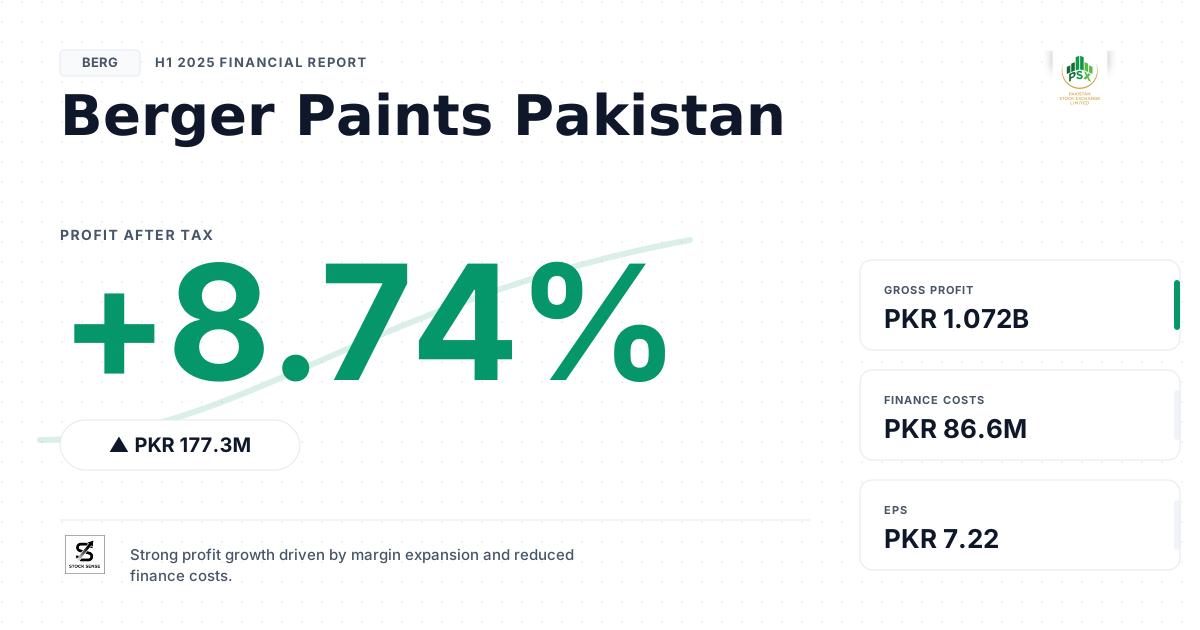
Berger Paints Pakistan Limited (BERG) has reported a robust financial performance for the half-year ended December 31, 2025, demonstrating an impressive surge in profitability. This strong bottom-line growth was achieved despite modest revenue expansion, primarily driven by strategic margin improvement and effective finance cost management, translating into a healthy increase in earnings per share for investors.
Financial Performance Highlights
For the half-year ended December 31, 2025, BERG reported net revenue of PKR 4.701 billion, a modest increase of 1.83% compared to PKR 4.616 billion recorded in the corresponding period last year. Despite this moderate top-line growth, the company achieved a significant improvement in its gross profitability, signaling underlying operational strengths.
Gross profit surged by 11.18% to PKR 1.072 billion (from PKR 964 million in H1 2024), with the gross margin expanding notably from 20.88% to 22.79%. This impressive margin expansion suggests improved pricing power, a more favorable product mix, or enhanced efficiency in managing the cost of sales. However, this positive was partially offset by a substantial 20.46% increase in total operating expenses (selling, distribution, administrative, and other operating costs), which rose to PKR 751.3 million from PKR 623.7 million. Consequently, profit from operations experienced a slight dip of 5.81% to PKR 320.4 million.
A pivotal factor in the period's success was the significant reduction in finance costs, which decreased by 32.82% to PKR 86.6 million from PKR 128.9 million. This substantial saving, likely attributable to a combination of lower interest rates and efficient debt management, played a crucial role in bolstering the company's bottom line. As a direct result, profit after tax (PAT) rose by a healthy 8.74% to PKR 177.3 million, up from PKR 163.1 million in the corresponding prior year. This translated into an improved Earnings Per Share (EPS) of PKR 7.22, compared to PKR 6.64 previously.
Cash flow from operating activities also remained robust, increasing by 5.95% to PKR 364.4 million (from PKR 343.9 million), underscoring the company's strong ability to generate healthy cash from its core business operations.
Key Drivers & Strategic Insights
While the unconsolidated financial statements do not provide a detailed breakdown by business segment, the notable expansion in gross margins strongly suggests improved operational efficiency or a strategic shift towards higher-margin products. The increase in selling and distribution expenses, rising to PKR 577.6 million from PKR 485.3 million, could indicate strategic investments in market reach or promotional activities, which, if successful, could be a catalyst for future revenue growth.
Management Actions & Future Outlook
Berger Paints significantly increased its capital expenditure during the period, investing PKR 184.2 million in property, plant, and equipment. This represents a substantial 42.74% increase from the PKR 129.0 million spent in the corresponding half-year, signaling management's clear commitment to expanding capacity or upgrading facilities and laying the groundwork for future growth.
Despite a slight 5.18% increase in total borrowings (from PKR 1.359 billion to PKR 1.429 billion) from June 30, 2025, the substantial 35.87% reduction in finance costs paid (from PKR 143.5 million to PKR 92.0 million) highlights effective treasury management or a favorable shift in the interest rate environment. Importantly, the Board of Directors did not announce any cash dividend, bonus issue, or right shares for the period, indicating a strategic focus on reinvesting profits back into the business to fuel long-term expansion rather than immediate shareholder payouts.
Investor Takeaway
For investors, Berger Paints' latest unconsolidated results present a mixed but generally positive picture. The strong bottom-line growth, propelled by impressive gross margin expansion and significantly lower finance costs, stands out as a clear positive. This performance underscores the company's resilience and its ability to enhance profitability even amidst modest top-line revenue increases.
However, the notable rise in operating expenses and the absence of a dividend might be points of consideration for some investors. The increased capital expenditure, while impacting immediate cash flow, strongly suggests a long-term growth strategy aimed at future capacity or market expansion. Prudent investors should closely monitor whether these higher operating expenses translate into accelerated revenue growth in upcoming quarters and how the company's reinvestment strategy will ultimately fuel future value creation. The sustained management of finance costs will also remain a critical metric to observe.