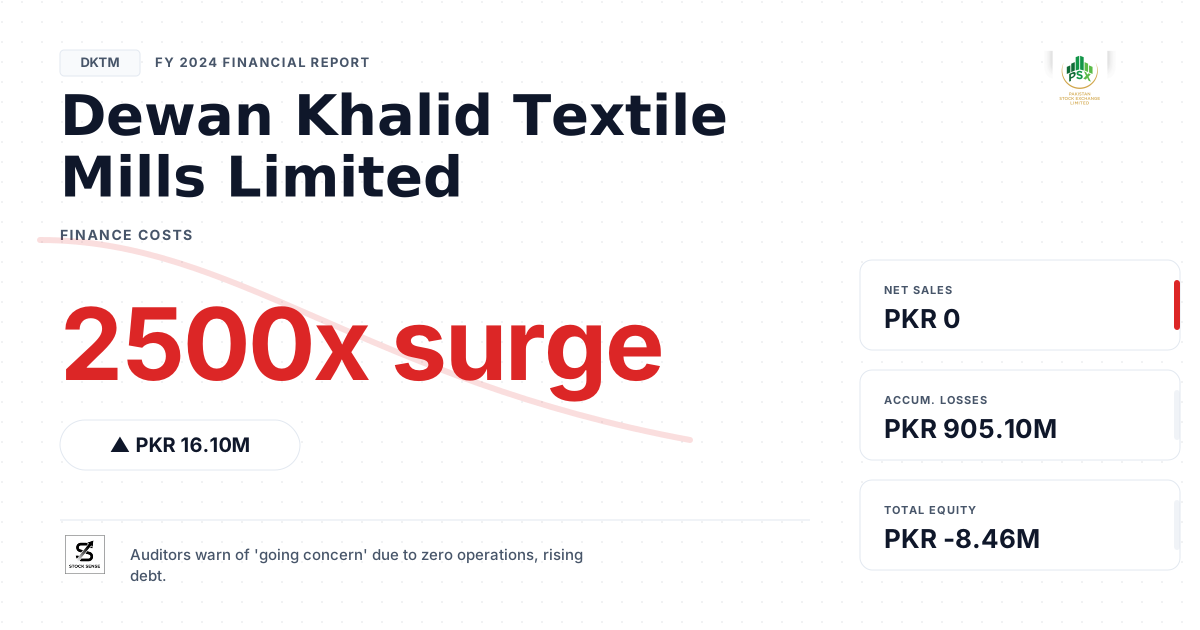
Dewan Khalid Textile Mills Limited (DKTM) has reported another challenging year, with its financial results for the year ended June 30, 2024, painting a bleak picture. The company continues to report zero operational sales, and its auditors have issued an adverse opinion, explicitly highlighting a "going concern" issue due to the closure of operations and default in debt repayments. This signals extreme caution for both current and potential investors.
Financial Performance Deteriorates
For the year ended June 30, 2024, DKTM reported no net sales, mirroring the previous year. Despite this, the company recorded a gross loss of PKR 32.56 million, an improvement from the PKR 49.14 million gross loss in 2023. This reduction in gross loss, alongside lower administrative and general expenses (PKR 10.47 million in 2024 vs. PKR 13.98 million in 2023), helped temper the overall loss, but the underlying operational issues remain critical.
The operating loss for the year stood at PKR 43.03 million, down from PKR 63.13 million in 2023. However, finance costs saw a dramatic surge, skyrocketing from a mere PKR 6,321 in 2023 to PKR 16.10 million in 2024, representing an over 2,500-fold increase and indicating a significant increase in debt servicing burden. After accounting for other income and deferred taxation, the company posted a net loss after taxation of PKR 49.13 million, an improvement from the PKR 54.52 million loss in 2023. Loss per share consequently improved slightly to PKR 5.11 from PKR 5.67.
On the balance sheet, accumulated losses swelled further to PKR 905.10 million by June 30, 2024, pushing the company's total equity into a negative territory of PKR 8.46 million, down from a positive PKR 40.66 million in 2023. Current liabilities remain substantial, with short-term borrowings increasing to PKR 462.76 million from PKR 340.10 million in the prior year, and an overdue portion of a syndicated long-term loan still standing at PKR 104.01 million.
Cash flow from operating activities remained negative at PKR 6.17 million, indicating that the company is not generating cash from its core business. The only positive cash flow was from investing activities, primarily from the sale of fixed assets amounting to PKR 6.20 million.
Key Drivers & Operational Stagnation
With zero sales reported, there are no operational segments or products driving the company's numbers. The primary factor influencing the financial results is the continued closure of operations, as explicitly stated by the auditors, leading to a complete absence of revenue generation. The reported 'cost of sales' and 'gross loss' figures likely represent fixed overheads and non-operational expenses incurred even without production.
Management Actions & Auditor's Grave Warning
The board has not recommended any cash dividend, bonus shares, or right shares for the year, consistent with the company's ongoing financial distress. The announcement explicitly states that there is no other price-sensitive information.
The most significant signal comes from the auditors' adverse opinion, which cites several critical issues:
- Going concern assumption due to closure of operations.
- Default in repayment of installments of restructured liabilities.
- Related non-provisioning of mark-up.
These points indicate severe liquidity and solvency challenges, with management seemingly unable to resolve fundamental operational and debt issues. There is no mention of any new capital expenditure, expansion plans, or strategic initiatives to revive operations.
Investor Takeaway: High Risk, No Turnaround in Sight
For investors, DKTM presents an extremely high-risk proposition. The core takeaway is the severe "going concern" threat, meaning there's significant doubt about the company's ability to continue operating. The absence of sales, coupled with increasing finance costs and negative equity, paints a grim picture. While the net loss decreased slightly, this is not due to operational improvement but rather a reduction in certain non-operational losses and administrative expenses.
A rational investor should be acutely aware of the explicit warnings from the auditors regarding operational closure and debt defaults. There are no apparent catalysts for a turnaround in the near term, and the company's ability to service its growing debt burden without any revenue stream is highly questionable. Investors should monitor any future announcements regarding debt restructuring, operational revival plans, or potential delisting, but the current outlook remains exceptionally challenging.