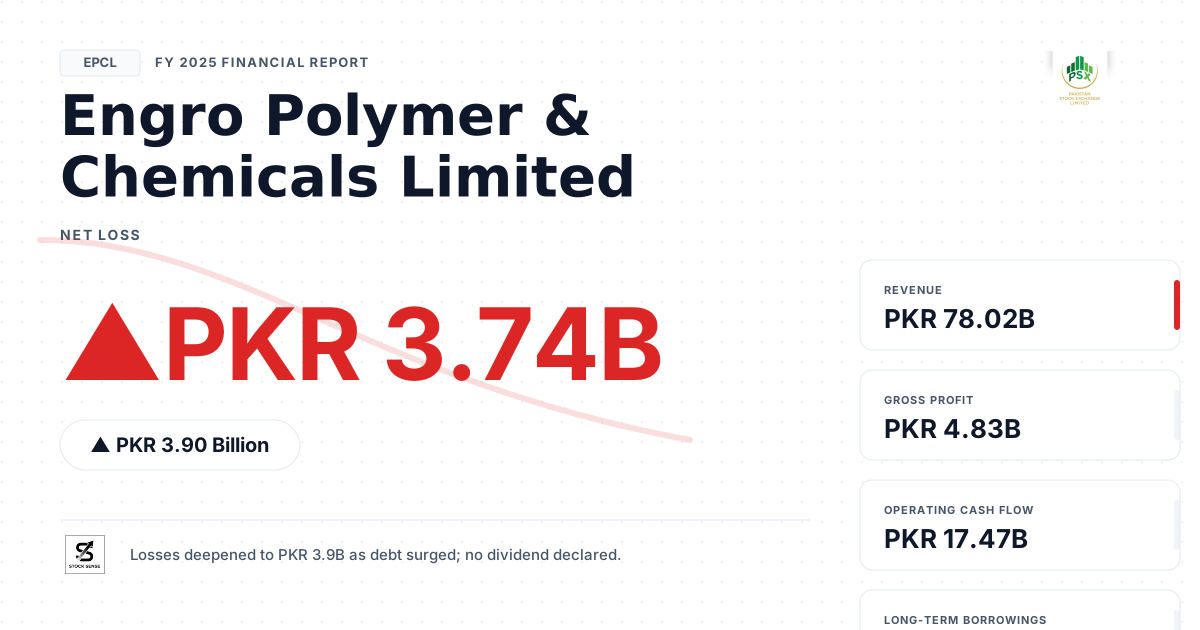
Engro Polymer & Chemicals Limited (EPCL) faced a challenging year, reporting a substantial consolidated net loss of PKR 3.90 billion for the year ended December 31, 2025. This marks a significant deterioration from the PKR 161 million loss recorded in 2024. The primary challenge stemmed from finance costs, which, despite a year-on-year reduction, still vastly exceeded operating profits, leading directly to the substantial net loss. In a disappointing outcome for shareholders, the Board of Directors did not recommend any cash dividend, bonus shares, or right shares for the period.
Financial Performance
While EPCL managed a modest revenue growth of approximately 3% to PKR 78.02 billion in 2025 from PKR 75.71 billion in 2024, the underlying profitability suffered. Gross profit declined sharply by nearly 27%, falling to PKR 4.83 billion from PKR 6.59 billion, indicating significant margin compression. This pressure continued down the income statement, with operating profit decreasing by almost 47% to PKR 2.34 billion from PKR 4.39 billion in the prior year.
The most striking factor impacting the bottom line was finance costs. Despite a reduction from PKR 7.53 billion in 2024 to PKR 5.73 billion in 2025, these costs still vastly exceeded the company's operating profit, leading directly to the substantial net loss. Consequently, the consolidated loss per share widened dramatically to PKR 4.29 in 2025, compared to a loss of PKR 0.40 in 2024.
On the balance sheet, total assets grew to PKR 117.31 billion, up from PKR 100.85 billion. However, this growth was largely fueled by a massive 83% surge in long-term borrowings, which increased from PKR 29.10 billion in 2024 to PKR 53.32 billion in 2025. This significant increase in debt contributed to a reduction in total equity, which fell by over 14% to PKR 23.40 billion, reflecting the year's comprehensive loss.
Net cash generated from operating activities showed a robust increase of over 131%, rising to PKR 17.47 billion in 2025 from PKR 7.55 billion in 2024. However, net cash utilized in investing activities also saw a substantial jump to PKR 21.55 billion, largely due to significant purchases of property, plant, and equipment (PKR 3.45 billion) and a massive increase in short-term investments, which soared from PKR 1.57 billion to PKR 21.52 billion. Net cash generated from financing activities increased to PKR 10.17 billion, primarily driven by the new long-term borrowings.
Key Drivers & Segments
While the financial statements do not provide a detailed breakdown by business segment or product, the overall decline in gross profit margins suggests that EPCL's core operations faced significant headwinds. This could be attributed to a combination of factors such as elevated raw material costs, intense market competition leading to lower selling prices, or shifts in demand dynamics for its polymer and chemical products. The company's ability to manage these operational pressures will be critical for future profitability.
Management Actions & Strategic Signals
The most notable management action is the substantial increase in long-term borrowings, which appears to have funded both ongoing capital expenditures and a significant deployment into short-term investments. This signals a strategic move to either expand capacity, optimize working capital, or position for future opportunities, though specific details are not disclosed in this announcement. The continued investment in property, plant, and equipment underscores a commitment to maintaining or growing operational infrastructure.
The decision to withhold dividends across all categories (cash, bonus, and right shares) is a clear signal from management to conserve capital. This aligns with the company's current financial performance, where the priority is likely to strengthen the balance sheet and manage the significant burden of finance costs, even as they saw a year-on-year reduction.
Investor Takeaway
For investors, EPCL's 2025 results present a mixed picture. While operational cash flow improved and revenue saw a modest increase, the significant net loss and absence of dividends are major concerns. The substantial increase in long-term debt, coupled with the deployment into short-term investments, raises questions about the company's strategic direction and its ability to generate sufficient returns to cover its elevated finance costs.
Rational investors should closely monitor several key areas going forward:
- Debt Management: How will EPCL manage its significantly increased debt load, particularly given that finance costs, though reduced year-on-year, still heavily outweigh operating profits?
- Investment Strategy: What are the specific objectives behind the large short-term investments, and what returns are expected from them?
- Operational Efficiency: Can the company improve its gross and operating margins to mitigate the impact of high finance costs?
- Future Dividends: A return to profitability and a clear dividend policy will be crucial for restoring investor confidence.
The upcoming Annual General Meeting on April 27, 2026, may offer further insights into management's strategy and outlook for the coming year. Until then, EPCL's path to sustainable profitability and shareholder returns remains under scrutiny.