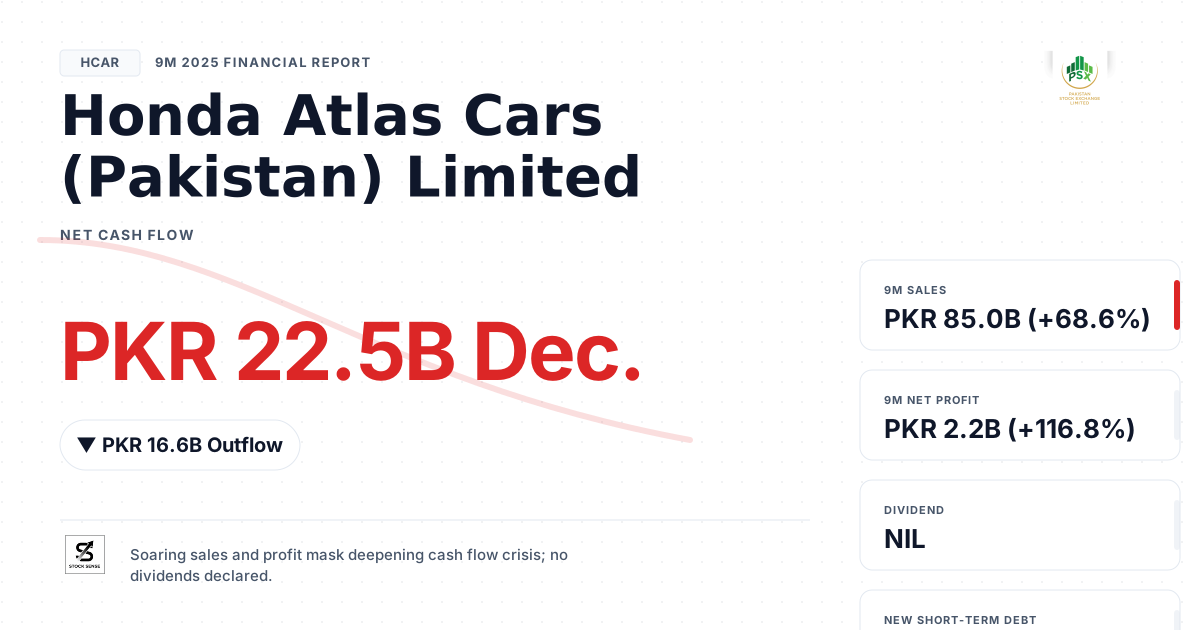
Honda Atlas Cars (Pakistan) Limited (HCAR) has reported a mixed bag of financial results for the third quarter and nine-month period ended December 31, 2025. While the company delivered robust top-line growth and a significant increase in net profit for the nine-month period, a closer look reveals an alarming deterioration in cash flow and a substantial increase in short-term debt, culminating in no dividend declaration for shareholders.
Financial Performance Highlights
HCAR's sales revenue for the third quarter jumped by an impressive 85.5% year-on-year to PKR 33.1 billion. For the nine-month period, sales grew by nearly 68.6% to PKR 85.0 billion, indicating strong demand or effective pricing strategies. However, the gross profit margin for the third quarter saw a dip to approximately 7.55% from 9.21% in the same period last year, suggesting rising input costs or competitive pressures. Despite this quarterly contraction, the nine-month gross margin slightly improved to 7.88% from 7.69%.
Net profit for the third quarter increased by about 15.7% to PKR 655 million, translating to earnings per share (EPS) of PKR 4.59. The nine-month profit showed even stronger growth, more than doubling by 116.8% to PKR 2.2 billion, with EPS rising to PKR 15.59 from PKR 7.19 a year ago. This profit growth, however, was significantly impacted by a more than doubling of finance costs in the third quarter, surging by 157.3% to PKR 553 million, reflecting the higher interest rate environment and increased borrowings.
The most concerning aspect of these results is the dramatic shift in cash flow. The company recorded a substantial net cash outflow from operating activities of PKR 16.6 billion for the nine-month period, a stark reversal from an inflow of PKR 5.9 billion in the prior year. This massive outflow, coupled with increased investing activities, has led to a staggering negative cash and cash equivalents balance of PKR 13.4 billion at the end of December 2025, a dramatic reversal from a positive PKR 5.6 billion at the start of the fiscal year (March 31, 2025).
The balance sheet reflects this liquidity strain, with current liabilities almost doubling from PKR 22.4 billion to PKR 44.1 billion since March 2025. This surge is primarily driven by the introduction of PKR 13.7 billion in short-term borrowings, which were non-existent at the start of the fiscal year. While current assets also grew significantly, mainly due to higher stock-in-trade and trade debts, the reliance on short-term debt for working capital is evident.
Key Drivers & Operational Insights
The robust sales growth suggests strong demand for HCAR's vehicle lineup or successful price adjustments in response to inflationary pressures and currency devaluation. The substantial increase in stock-in-trade (from PKR 15.0 billion to PKR 32.6 billion) and trade debts (from PKR 7.6 billion to PKR 12.0 billion) indicates higher production and sales volumes, but also potentially longer collection cycles or increased inventory holding costs. The financial statements do not provide a breakdown by specific vehicle models or business segments, making it difficult to pinpoint exact product-level drivers.
Management Actions & Strategic Signals
The company's overall investing activities saw a significant increase in cash outflow, rising from PKR 356 million in 9M 2024 to PKR 887 million in 9M 2025. This included substantial purchases of intangible assets (PKR 557 million) and continued capital expenditure on property, plant, and equipment (PKR 475 million) during the nine-month period. This suggests ongoing capital expenditure and a commitment to future growth or operational improvements, albeit funded by debt. Crucially, the Board of Directors has recommended 'NIL' for any corporate action, meaning no cash dividend, bonus issue, or right shares for shareholders. This decision, despite a profitable period, underscores the company's current liquidity challenges and the need to conserve cash.
Investor Takeaway: Navigating HCAR's Complex Picture
For investors, HCAR's latest results present a complex picture. While top-line and bottom-line growth are encouraging, the severe deterioration in cash flow and the substantial increase in short-term debt are significant red flags. The absence of a dividend, despite a profitable period, signals management's focus on shoring up liquidity rather than distributing profits.
Rational investors should closely monitor several key areas going forward:
- Cash Flow Improvement: Can HCAR reverse the negative operating cash flow trend and reduce its reliance on short-term debt?
- Debt Management: Watch for strategies to manage and reduce the significant short-term borrowings, especially in a high-interest rate environment.
- Margin Stability: Observe if gross margins can stabilize or improve in the coming quarters amidst cost pressures.
- Dividend Prospects: Future dividend declarations will be a strong indicator of improved financial health and liquidity.
The company's ability to convert its strong sales into sustainable positive cash flow will be crucial for its long-term stability and investor confidence.