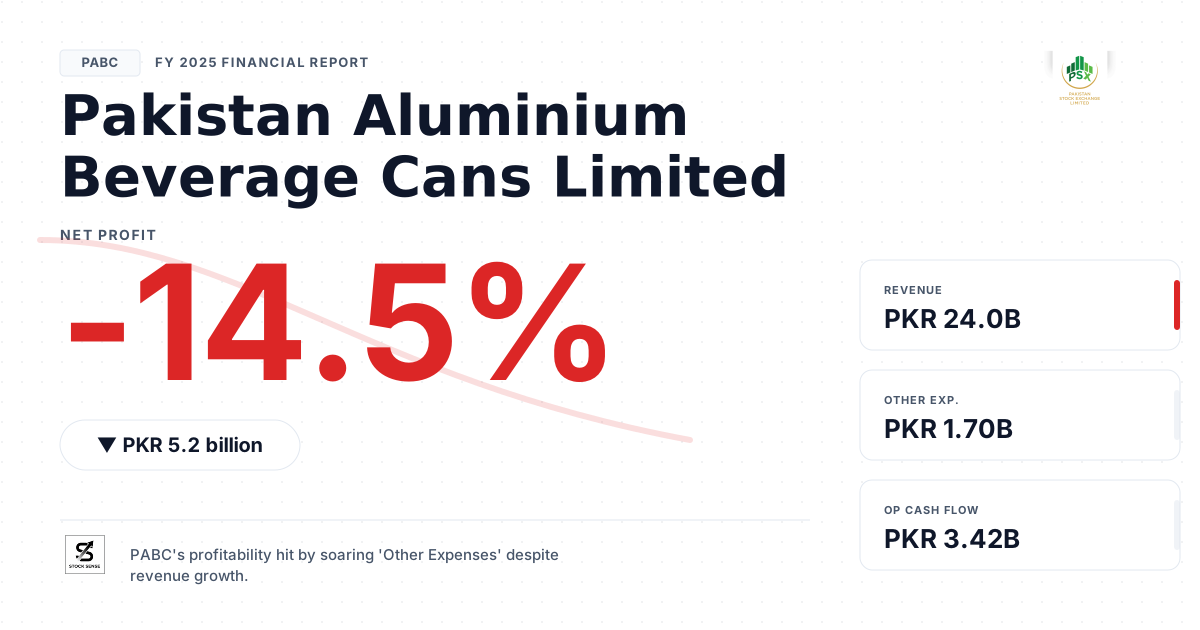
Pakistan Aluminium Beverage Cans Limited (PABC) posted a mixed performance for the year ended December 31, 2025. While the company managed a modest revenue increase, its net profit saw a notable decline, primarily due to an unexpected surge in 'Other Expenses'. Lower finance costs and a significantly reduced tax burden helped mitigate an even steeper fall in earnings. No dividend was declared for the year, indicating a focus on reinvestment or balance sheet strengthening.
Financial Performance Overview
PABC's sales grew by approximately 4.0% year-on-year, reaching PKR 24.0 billion in 2025, up from PKR 23.1 billion in 2024. This indicates continued demand for its products in the market. However, this top-line growth did not translate to the bottom line.
Gross profit decreased by about 7.1% to PKR 7.8 billion (from PKR 8.4 billion in 2024), suggesting pressure on margins or higher cost of sales relative to revenue growth. The net profit for the year fell by roughly 14.5% to PKR 5.2 billion (from PKR 6.1 billion in 2024). This translated to Earnings Per Share (EPS) of PKR 14.44, down from PKR 16.90 in the previous year.
Net cash generated from operating activities saw a substantial decline of approximately 48.6%, dropping to PKR 3.42 billion from PKR 6.66 billion in 2024. This indicates less efficient working capital management or higher operational cash outflows during the year. On the balance sheet, total assets expanded significantly by 24.4% to PKR 39.44 billion (from PKR 31.70 billion), driven by a substantial increase in both long-term and short-term investments. Equity also grew by 31.2% to PKR 21.96 billion (from PKR 16.74 billion), reflecting retained earnings.
Key Drivers & Segment Analysis
The modest 4.0% sales growth suggests a stable market for beverage cans, possibly driven by volume increases or price adjustments. However, the primary concern for investors is the massive 178.4% increase in 'Other Expenses', which ballooned from PKR 611 million in 2024 to PKR 1.70 billion in 2025. This category was the main detractor from profitability and warrants a detailed explanation from management.
On a positive note, finance costs decreased by 18.5% to PKR 832 million, likely due to a reduction in interest rates or better debt management. Crucially, the income tax expense plummeted by 80.8% to PKR 126 million, providing a significant boost to the bottom line. Without this substantial tax relief, the profit decline would have been much steeper. Other income also rose by 5.5% to PKR 2.32 billion, likely benefiting from the company's increased investment activities.
Management Actions & Strategic Signals
PABC has significantly increased its investment portfolio, with long-term investments growing over 15 times to PKR 1.60 billion and short-term investments increasing by 36.7% to PKR 19.95 billion. This signals a strategic move to deploy capital, possibly for future growth, diversification of income streams, or to generate investment income. While short-term borrowings increased by 20.5% to PKR 9.69 billion from PKR 8.04 billion, long-term financing repayments outpaced new proceeds, leading to a net reduction in long-term debt.
The Board recommended NIL for cash dividend, bonus shares, and right shares. This decision, despite a profit of over PKR 5.2 billion, indicates a preference to retain earnings for reinvestment or strengthening the balance sheet, especially given the significant capital deployment into investments and the reduced operational cash flow.
Investor Takeaway
For investors, the most critical point to watch is management's explanation for the dramatic increase in 'Other Expenses'. This category's surge is the primary reason for the profit decline despite sales growth and significant tax relief. Understanding if this is a one-off event, a change in accounting, or a new recurring cost will be crucial.
While sales growth is positive, the erosion of profitability is a concern. The company's ability to translate revenue into sustainable earnings will be key going forward. The significant increase in investments suggests a strategic shift or preparation for future growth, and investors should seek clarity on the nature and expected returns of these capital allocations. The absence of a dividend, coupled with lower operational cash flow, reinforces a focus on reinvestment, which could be beneficial for long-term value creation if these investments yield strong returns.