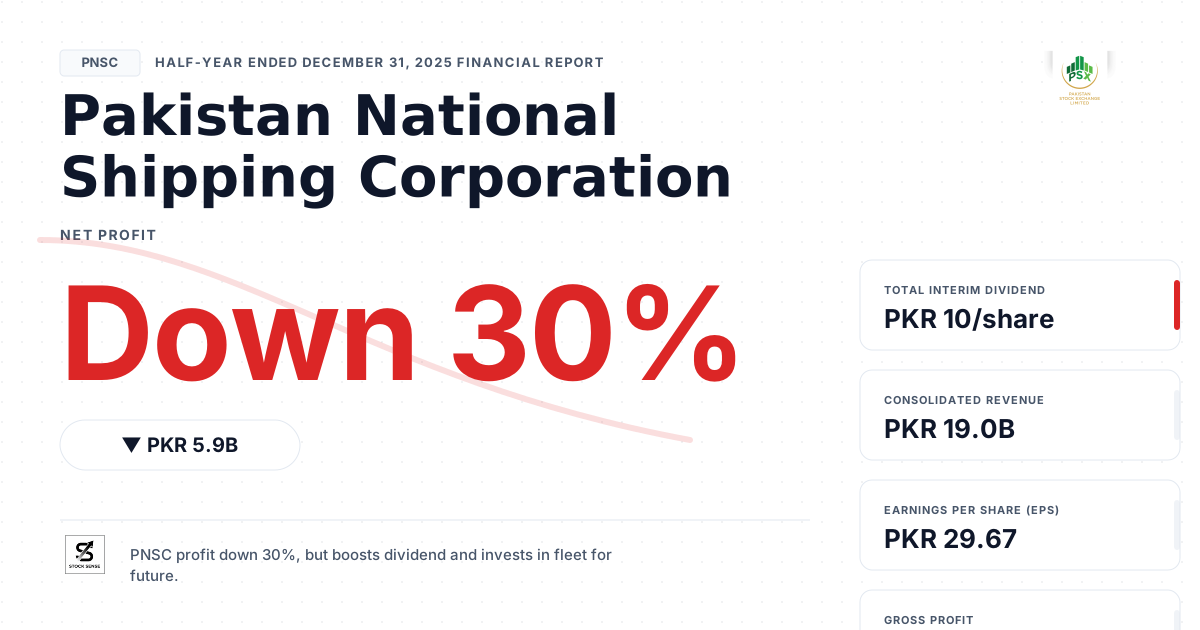
Pakistan National Shipping Corporation (PNSC) has announced a substantial interim cash dividend of Rs. 5 per share (50%) for the half-year ended December 31, 2025. This is in addition to an interim dividend of Rs. 5 per share already paid, bringing the total interim dividend for the period to an impressive Rs. 10 per share (100%). This shareholder-friendly move comes despite a notable decline in consolidated profits, primarily due to escalating fleet expenses and a reduction in other income, even as the company ramps up its capital expenditure on property, plant, and equipment.
Financial Performance Overview
PNSC's consolidated revenue from contracts with customers grew by approximately 9% to PKR 19.0 billion for the half-year ended December 31, 2025, compared to PKR 17.4 billion in the same period last year. However, total revenue growth was a more modest 5% to PKR 20.8 billion, as income from other operating activities saw a decline.
Despite this top-line growth, consolidated Profit for the Period fell by nearly 30% to PKR 5.9 billion from PKR 8.4 billion in the prior half-year. This translated to a corresponding drop in Earnings Per Share (EPS) from PKR 42.29 to PKR 29.67. Gross profit also declined by about 21% to PKR 5.4 billion, indicating pressure on core margins.
A significant shift occurred in operating cash flow, which turned negative, showing a net cash *used* of PKR 1.2 billion compared to PKR 7.7 billion generated in the same period last year. This was partially offset by positive cash flow from investing activities (PKR 1.9 billion), largely due to a net inflow from short-term investments. Financing activities, on the other hand, saw a higher outflow of PKR 5.8 billion, mainly for the increased dividend payments.
The company's balance sheet remains robust, with total assets increasing slightly to PKR 115.2 billion and total equity growing to PKR 103.8 billion. Non-current assets, particularly property, plant, and equipment, saw a healthy increase of approximately 14% to PKR 35.1 billion, reflecting ongoing investments.
Key Drivers & Segment Performance
While core shipping business revenue showed positive growth, the overall top line was tempered by a decrease in income from 'other operating activities'. The significant consolidated profit decline was primarily driven by two factors:
- A substantial 19% increase in fleet expenses, reaching PKR 15.3 billion. This suggests rising operational costs, potentially due to fuel prices, maintenance, or increased activity.
- A notable 32% reduction in 'other income' (non-operating), which fell by approximately PKR 1.5 billion to PKR 3.3 billion. The combined impact of these rising costs and diminishing non-core income streams significantly compressed profitability.
Management Strategy & Shareholder Commitment
The Board's recommendation of an additional Rs. 5 per share interim cash dividend, bringing the total for the half-year to Rs. 10 per share, signals a strong commitment to shareholder returns despite the profit dip. No bonus or right shares were announced.
PNSC made substantial investments in property, plant, and equipment, with purchases totaling over PKR 6.1 billion in the half-year, a significant increase from PKR 1.4 billion in the previous year. This indicates a clear focus on fleet modernization or expansion, crucial for long-term growth in the shipping sector. The company also continued to manage its long-term financing, with a repayment of approximately PKR 435 million, reducing its non-current long-term financing.
Investor Takeaway
The generous interim dividend makes PNSC an attractive option for income-focused investors. However, the sharp decline in consolidated profit and the shift to negative operating cash flow are key areas of concern. Investors should scrutinize the drivers behind the increased fleet expenses and the sustainability of 'other income' in future reports.
While the company is clearly investing for the future through significant capital expenditure, the immediate challenge lies in managing rising operational costs and stabilizing non-core income streams to translate revenue growth into higher bottom-line profits. Future reports should be monitored for trends in fleet expenses, the composition and stability of 'other income,' and the impact of recent capital expenditures on revenue generation and, critically, on the recovery of operating cash flows.