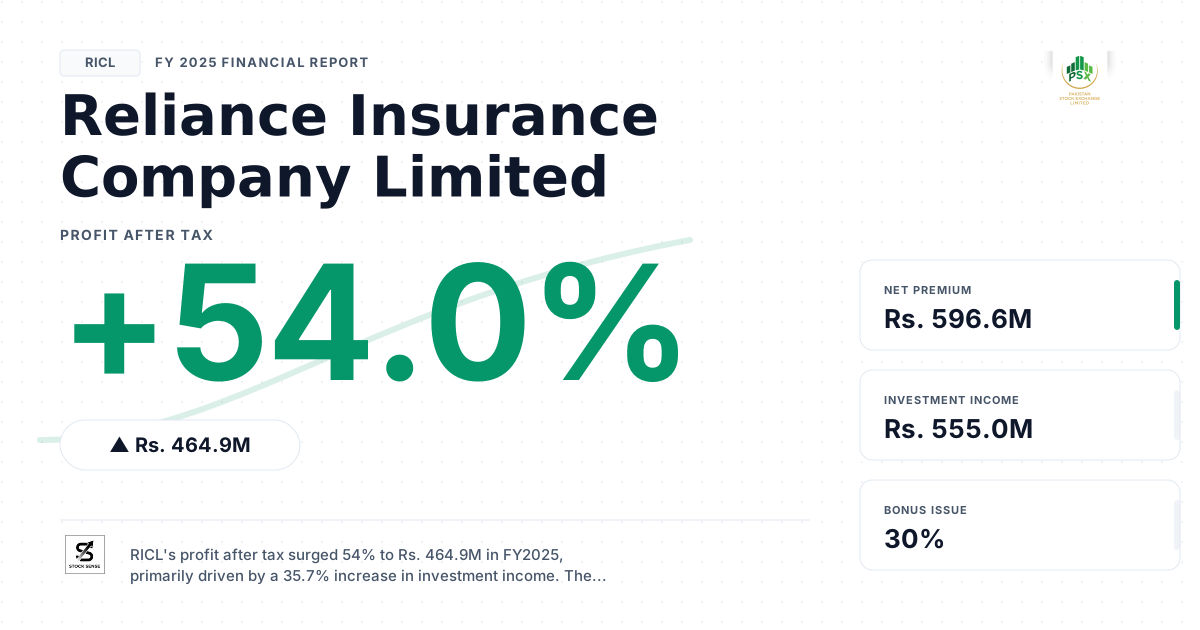
Reliance Insurance Company Limited (RICL) has reported robust financial results for the year ended December 31, 2025, with profit after tax surging by an impressive 54.0%. Shareholders are set to receive a recommended 30% bonus issue, signaling management's strategic focus on strengthening the company's capital base rather than distributing a cash dividend for the period.
Financial Performance Highlights
RICL's core insurance business demonstrated healthy growth, with net insurance premium increasing by 9.2% to Rs. 596.6 million in 2025, up from Rs. 546.5 million in the previous year. This was supported by a modest 11.8% improvement in underwriting results, which climbed from Rs. 84.0 million to Rs. 93.9 million.
The primary catalyst for the company's stellar profitability was its investment income, which recorded a remarkable 35.7% increase, reaching Rs. 555.0 million in 2025 compared to Rs. 408.9 million in 2024. This robust performance propelled profit after tax from Rs. 301.9 million in 2024 to Rs. 464.9 million in 2025, translating into an Earnings Per Share (EPS) jump from Rs. 3.00 to Rs. 4.63.
On the balance sheet, total assets expanded by 19.7% to Rs. 3.814 billion from Rs. 3.185 billion. Total equity also saw substantial growth, increasing by 32.5% to Rs. 2.083 billion from Rs. 1.572 billion, reflecting both retained earnings and the impact of the bonus issue. While net cash used in underwriting activities remained negative, increasing from (Rs. 24.6 million) in 2024 to (Rs. 58.2 million) in 2025, cash generated from investing activities improved significantly to Rs. 199.5 million from Rs. 181.2 million, underscoring the company's active investment strategy.
Key Drivers & Segment Performance
RICL's profitability was predominantly fueled by its robust investment portfolio. The substantial increase in investment income highlights the company's effective asset management strategies in what appears to be a favorable market environment. While core underwriting activities showed positive momentum, their contribution was secondary to the impressive investment gains.
Conversely, the profit contribution from Window Takaful Operations - Operator's Fund experienced a decline, moving from Rs. 30.1 million in 2024 to Rs. 18.3 million in 2025. This suggests that while the conventional insurance segment and investment returns are thriving, the Takaful segment faced some headwinds during the year.
Management's Strategic Moves
The Board of Directors has recommended a 30% bonus issue, meaning shareholders will receive 30 new shares for every 100 shares held. This decision, in lieu of a cash dividend, indicates management's strategy to conserve cash, thereby strengthening its equity base and supporting future growth initiatives. Fractional bonus shares will be sold in the market, with proceeds donated to a charitable institution, as per the board resolution.
Further signaling future expansion potential, the company also proposes to increase its Authorized Share Capital from Rs. 1.5 billion to Rs. 2.0 billion. This move provides flexibility for future capital raises or additional bonus issues, positioning RICL for potential expansion or increased underwriting capacity in the coming years.
Investor Outlook
For investors, RICL's latest results present a generally positive picture, albeit with nuanced considerations. The strong profit growth and bonus share issuance are clear positives, reflecting sound financial management and a commitment to shareholder returns through capital appreciation. The absence of a cash dividend, despite robust profits, might be a point of consideration for income-focused investors, but it aligns with a strategy to bolster the company's financial resilience and capacity for future growth.
Moving forward, investors should closely monitor the sustainability of RICL's investment income, as it has been a significant driver of recent performance. Continued improvement in core underwriting profitability will also be crucial for long-term stability. The increased authorized capital and enhanced equity base could serve as catalysts for future expansion or more generous shareholder distributions once the company's growth objectives are met.