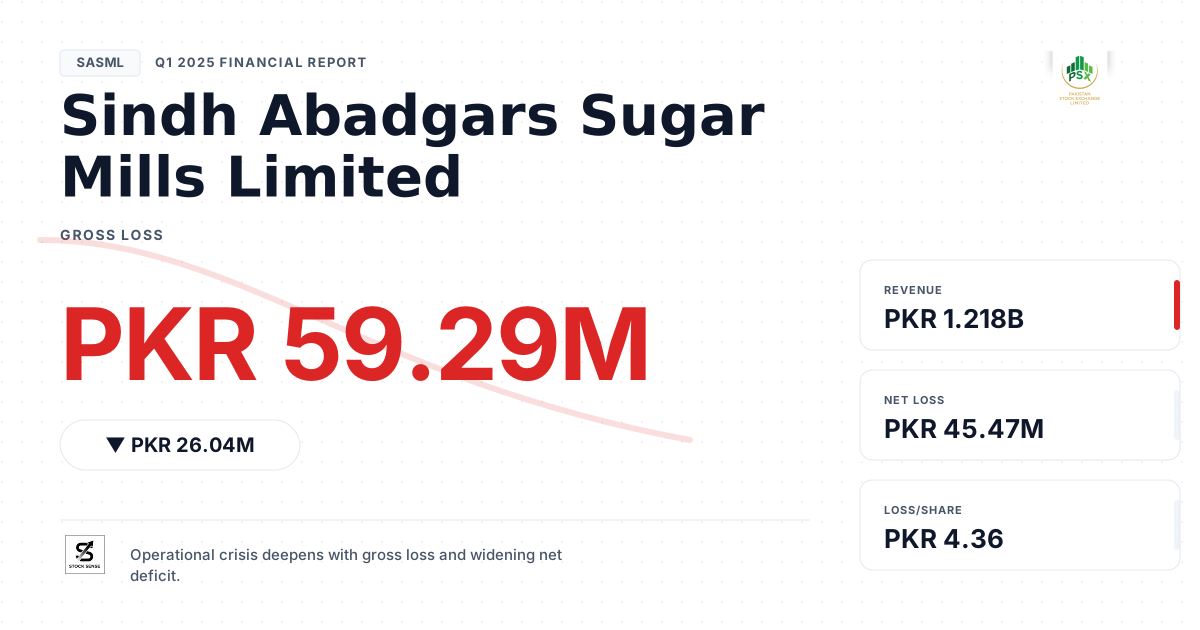
Sindh Abadgars Sugar Mills Limited (SASML) has reported a profoundly challenging first quarter ended December 31, 2025, presenting a stark picture of operational distress. The period is notably characterized by a significant decline in revenue and an alarming swing from gross profit to a substantial gross loss. This deterioration in core profitability, coupled with a widening net loss and the absence of any shareholder returns (cash dividend, bonus, or right shares), signals a critical period for the company and its investors.
Financial Performance Under Pressure
SASML's revenue for the quarter ended December 31, 2025, stood at PKR 1.218 billion, marking a 9.25% decrease from PKR 1.342 billion reported in the corresponding period of the previous year (Q1 2024). Far more concerning is the dramatic reversal in gross profitability: the company swung from a gross profit of PKR 33.25 million in Q1 2024 to a significant gross loss of PKR 26.04 million in Q1 2025. This alarming shift underscores severe pressure on SASML's core operations and its fundamental ability to cover production costs.
The operational loss expanded drastically, surging to PKR 74.54 million in Q1 2025 from PKR 15.03 million in Q1 2024. After incorporating finance costs, other income, and taxation, the loss after taxation for the quarter deepened to PKR 45.47 million, an increase from PKR 37.67 million in the previous year. This translated directly to a worsening basic and diluted loss per share, which climbed from PKR 3.61 to PKR 4.36, further eroding shareholder value.
The Statement of Financial Position reveals a substantial expansion in total assets and liabilities, growing from PKR 6.656 billion at September 30, 2025, to PKR 9.139 billion at December 31, 2025. This surge was primarily fueled by a significant rise in current assets, notably 'Stock in trade' (PKR 1.386 billion from PKR 1.239 billion) and a new 'Short term investment' of PKR 1.696 billion. Concurrently, current liabilities also saw a sharp increase, driven by 'Trade and other payables' (PKR 2.076 billion from PKR 1.187 billion) and a substantial rise in 'Short term borrowings' (PKR 2.498 billion from PKR 923 million). This indicates increased working capital requirements, likely to finance operations and inventory. Net cash generated from operating activities decreased by approximately 21% year-on-year, from PKR 823 million to PKR 651 million. Despite this decline, the company's cash and bank balances, while still negative at PKR 48.69 million, showed an improvement from the prior year's negative PKR 394.88 million, offering a slight silver lining amidst the financial strain.
Key Drivers & Operational Headwinds
The core issue driving SASML's deteriorating financial performance is its inability to maintain gross margins, evidenced by the cost of sales (PKR 1.244 billion) now exceeding revenue (PKR 1.218 billion), directly resulting in the gross loss. This critical imbalance points to significant challenges across sales pricing, escalating input costs (particularly sugarcane procurement), or inefficiencies in production. Although specific segment data is not detailed in the report, it is clear that the primary sugar milling operation is confronting substantial headwinds. While administrative and selling expenses remained relatively consistent year-on-year, their control was insufficient to counteract the severe impact of the gross loss.
Management Actions & Strategic Signals
The Board of Directors' decision to declare 'NIL' for cash dividend, bonus shares, and right shares unequivocally signals the company's severe financial strain and an urgent need to conserve capital amidst mounting losses. The reported minor capital expenditure of PKR 5.98 million during the quarter suggests a cautious approach, prioritizing the maintenance of existing operations over significant expansion. The substantial increase in short-term borrowings, rising by PKR 1.575 billion, further indicates reliance on debt to manage escalating working capital requirements, exacerbated by the negative operating cash flow trend and increased inventory. Crucially, the announcement provided no specific forward-looking guidance or strategic plans to address the current challenges, leaving investors without a clear roadmap.
Investor Takeaway
For investors, SASML's Q1 2025 results paint a grim picture, signaling a period of profound operational and financial challenges. The dramatic swing to a gross loss is a critical red flag, indicating that the company is fundamentally struggling at its core business level. The complete absence of any corporate action for shareholders further amplifies the difficult environment and the lack of immediate prospects for returns.
Rational investors should closely monitor the following in upcoming reports:
- Margin Recovery: A swift return to gross profitability is paramount for establishing sustainable operations and reversing the current trend.
- Cost Control: Close scrutiny of the effectiveness of measures to manage both production (cost of sales) and overhead costs (administrative and selling expenses).
- Debt Management: The substantial increase in short-term borrowings demands careful attention, particularly in light of persistent negative cash balances and its implications for financial stability.
- Market Conditions: Any discernible improvements in domestic sugar prices or stability in key input costs, such as sugarcane, that could alleviate pressure on the company's profitability.
Until there are clear signs of operational turnaround and a return to profitability, SASML remains a high-risk proposition with no immediate prospects for shareholder returns.