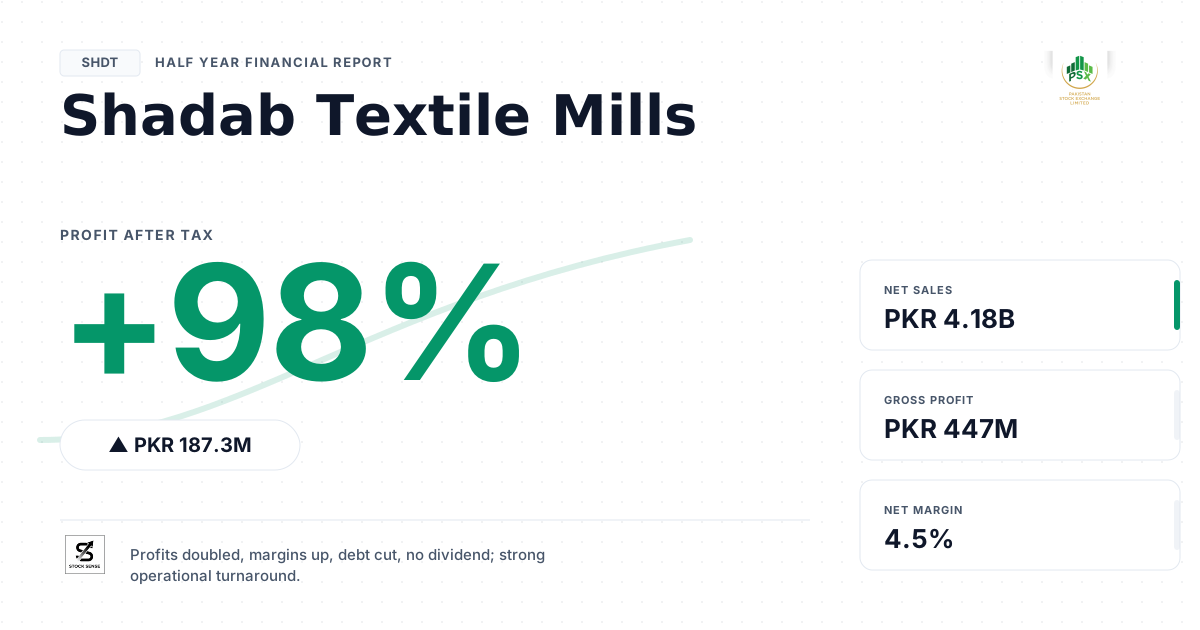
Shadab Textile Mills Limited (SHDT) has announced impressive financial results for the half year ended December 31, 2025, showcasing a significant surge in profitability. The company nearly doubled its profit after taxation and earnings per share compared to the same period last year, primarily driven by robust margin expansion and reduced finance costs. While the strong performance signals improved operational efficiency and financial health, investors should note the absence of any dividend announcement.
Financial Performance
SHDT reported a net sales increase of approximately 6%, reaching PKR 4.18 billion for the half year, up from PKR 3.94 billion in the prior year. However, the real story lies in the dramatic improvement in profitability. Gross Profit surged by about 55% to PKR 447 million from PKR 288 million, indicating better cost management or improved pricing power. This translated into an even more substantial 69% jump in Operating Profit, which rose to PKR 350 million from PKR 207 million.
The company's Profit After Taxation more than doubled, soaring by approximately 98% to PKR 187.3 million, compared to PKR 94.5 million in the corresponding period last year. This strong bottom-line performance is reflected in the Basic and Diluted Earnings Per Share (EPS), which increased from PKR 5.70 to PKR 11.28. Margins saw significant expansion across the board, with Gross Profit Margin improving from about 7.3% to 10.7%, and Net Profit Margin rising from 2.4% to 4.5%.
On the balance sheet front, total equity increased from PKR 1.75 billion to PKR 1.90 billion, strengthening the company's financial base. Notably, current liabilities decreased significantly from PKR 1.27 billion to PKR 1.01 billion, primarily due to a substantial reduction in short-term borrowings, signaling improved liquidity and reduced financial risk. Cash generated from operations, however, saw a decline from PKR 504 million to PKR 366 million, a point that warrants closer observation.
Key Drivers & Segments
The primary catalyst for SHDT's enhanced profitability was the notable improvement in gross profit margins. This suggests effective cost of sales management, as cost of sales grew at a slower rate (around 2%) than net sales (around 6%). Further contributing to the bottom line were:
- A significant reduction in finance costs, which decreased from PKR 54 million to PKR 37 million, easing the burden on profits.
- An increase in other income, rising from PKR 2.4 million to PKR 8.2 million, providing an additional boost.
While specific segment performance details are not provided in the interim report, the overall improvement points to a healthier operational environment for the textile manufacturer.
Management Actions & Strategic Signals
Despite the strong financial results, the Board of Directors did not recommend any cash dividend, bonus shares, or right shares for the period. This decision, while potentially disappointing for income-focused investors, might indicate a strategic focus on retaining earnings for future growth or further strengthening the balance sheet.
The company demonstrated a clear commitment to deleveraging, with significant repayments of short-term borrowings (PKR 224 million) and long-term loans (PKR 34.8 million). Capital expenditure for property, plant, and equipment saw a reduction from PKR 120.9 million in the previous half-year to PKR 50.1 million, suggesting a period of consolidation rather than aggressive expansion.
Investor Takeaway
For investors, SHDT's latest results present a compelling narrative of operational turnaround and financial strengthening. The substantial increase in profits and EPS, coupled with significant debt reduction and improved margins, paints a positive picture of the company's intrinsic value. The focus on deleveraging is a strong signal of prudent financial management, enhancing the company's resilience.
However, the modest revenue growth and the decline in operating cash flow warrant attention. Investors should monitor whether the margin improvements are sustainable and how the company plans to drive future top-line growth. The absence of a dividend, despite strong earnings, suggests that management might be prioritizing reinvestment or balance sheet optimization. Future disclosures on capital allocation and dividend policy will be crucial for long-term investors.