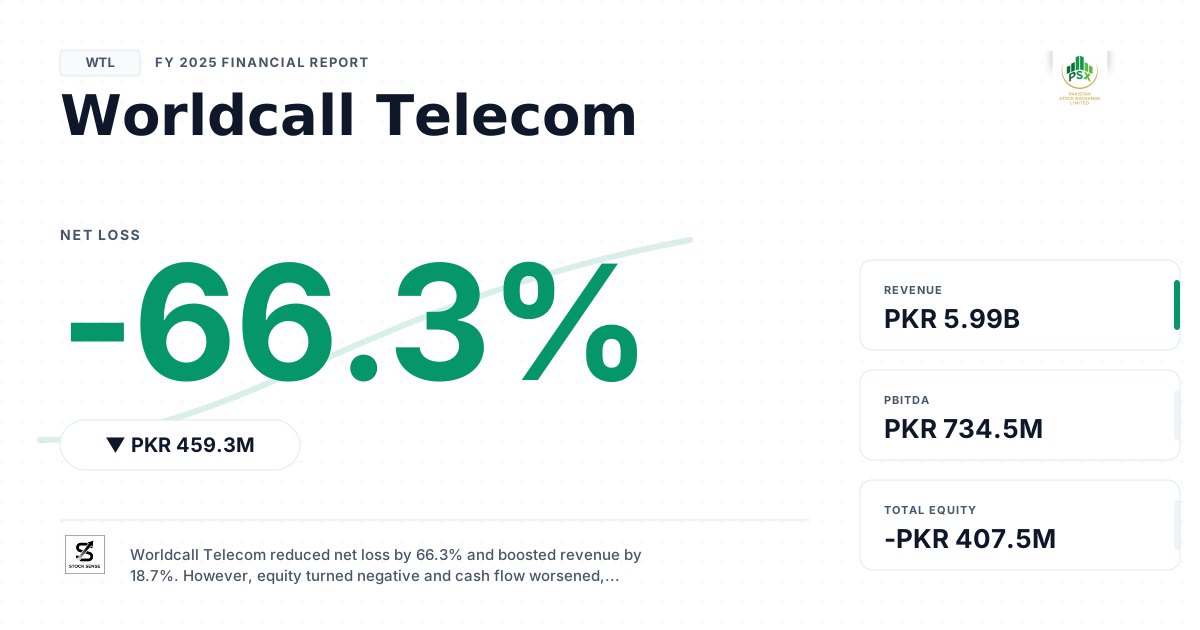
Worldcall Telecom Limited (WTL) has announced its financial results for the year ended December 31, 2025, revealing a dramatic 66.3% reduction in its net loss. While this marks a significant operational turnaround, the company's equity position turned negative, and it continues to grapple with worsening cash flow challenges, which remain critical concerns for investors. No dividends were recommended for the period, consistent with the company's financial state.
Financial Performance Highlights
WTL reported a notable 18.7% increase in revenue, climbing to PKR 5.99 billion in 2025 from PKR 5.05 billion in the previous year. This top-line growth, combined with improved cost management, has significantly impacted profitability.
The most striking improvement is in the company's profitability metrics. Profit Before Interest, Taxation, Depreciation, and Amortization (PBITDA) surged by an impressive 328.6%, reaching PKR 734.5 million compared to PKR 171.4 million in 2024. Consequently, the net loss after tax was dramatically reduced by approximately 66.3%, from PKR 1.364 billion in 2024 to PKR 459.3 million in 2025. This translates to an improved basic loss per share of PKR 0.09, down from PKR 0.27.
Despite the operational improvements, the cash flow situation remains precarious. Net cash used in operating activities worsened, increasing from PKR 89.6 million in 2024 to PKR 205.0 million in 2025, indicating a higher cash burn from core operations. Investing activities also shifted from generating PKR 139.3 million in 2024 to using PKR 94.6 million in 2025, largely due to significant intangible asset purchases.
The balance sheet continues to reflect financial strain. Total equity turned negative, from a positive PKR 8.9 million in 2024 to a negative PKR 407.5 million in 2025, as accumulated losses continued to mount. Current liabilities remain substantial, contributing to a deeply negative working capital position. Cash and bank balances plummeted by nearly 78.7%, from PKR 99.5 million to PKR 21.2 million, highlighting severe liquidity pressure.
Key Drivers & Operational Efficiency
The robust revenue growth is a positive signal, suggesting an expansion in WTL's service offerings or customer base. The substantial 147.3% increase in 'Other Income' also played a significant role in bolstering the PBITDA. Furthermore, a reduction in operating costs from PKR 430.4 million in 2024 to PKR 366.3 million in 2025 demonstrates effective cost control measures. While specific segment performance details are not provided in the summary, these broad trends indicate improving operational efficiency.
Management Actions & Strategic Signals
Capital expenditure on property, plant, and equipment decreased in 2025, but the company made significant investments in intangible assets (PKR 141.2 million). To manage its liquidity, WTL heavily relied on financing activities, with sponsor loans increasing by PKR 363.2 million on the balance sheet, contributing to a net cash inflow of PKR 221.3 million from financing activities. The absence of any dividend recommendation (cash, bonus, or right shares) is consistent with the company's ongoing loss-making status and critical need to conserve cash.
Investor Takeaway
WTL's 2025 results present a mixed picture for investors. The dramatic reduction in net loss and strong PBITDA growth are encouraging signs of operational improvement and a potential turnaround story. However, these gains are overshadowed by persistent and worsening liquidity issues, evidenced by increased cash outflow from operations and critically low cash reserves. The continued reliance on sponsor loans for financing underscores the company's fragile financial health.
Rational investors should closely monitor WTL's ability to translate its operational improvements into sustainable positive cash flow from operations. The negative equity position and the need for ongoing debt financing, particularly from sponsors, represent significant risks. While the trajectory of loss reduction is positive, the path to financial stability and potential shareholder returns (such as dividends) remains challenging and dependent on robust cash generation in the coming periods.